

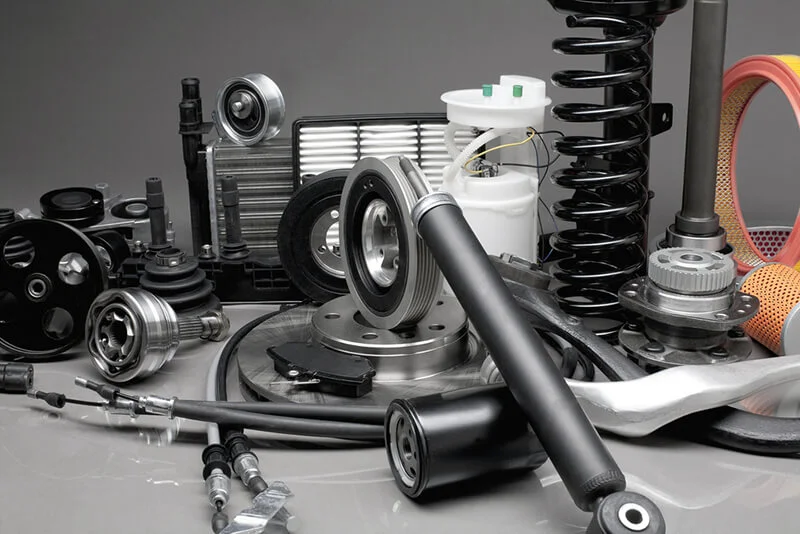
Until something goes wrong, and parts need to be replaced, most people give little thought to auto parts. Yet many details separate Toyota parts from generic alternatives, behind the scenes. Over time, this difference becomes a literal difference in dollars and sense, in how long a vehicle lasts, and how much is spent keeping it on the road.
Toyota Parts Are Designed Differently
Toyota has a unique approach to how they design their parts. While necessary parts may be built to spec, more often than not they are slightly over-engineered. In turn, most parts receive more wear and tear than they’re designed for, but at least it means Toyota parts are intended to last.
Take a radiator hose, for example. An aftermarket radiator hose may do what’s needed, designed for the proper temperature and pressure, but a Toyota version typically has a little more leeway. The rubber composition withstands heat breakdown better. The reinforcement layers are greater. The operational lifespan is longer than what’s necessary for it to simply pass.
This process applies from engine mounts to wheel bearings. The logic stands that it’s more beneficial to create something right the first time than cheap and have to replace it twice. And since Toyotas are some of the longest-operating reliable vehicles, the logic pays off.
Material Differences Show Up with Time
It’s not how something performs when it’s new that tells you all you need, it’s how well it holds up after ten-thousand kilometers that reveals true success. When manufacturers use inferior materials, problems occur.
Brake pads provide an excellent example. Budget brakes may stop the vehicle, but when they’re made from certain compounds, issues arise. Too hard and it wears down rotors too quickly. Too soft and dust accumulates in calipers resulting in uneven wear. Thus, the cheap upfront option creates costly maintenance down the line.
Conversely, Toyota engineers brake pads as part of a system, pad material, rotor construction, caliper guidelines and ABS programming work cohesively together. When we need replacements that fall in line with such specifications, proper Toyota Spare Parts in Perth mean the entire braking system will continue functioning as designed.
This philosophy runs rampant everywhere. Oil filters with lower filtration ratings let junk slip through the cracks. Drive belts that aren’t perfectly calibrated create vibration or uneven wear on pulleys. They might not be catastrophic day one issues, but slow degradation over time makes the innocuous eventual shortcomings far worse.
Modern Vehicles Operate on Precise Parts
Today’s vehicles are incredibly sophisticated. They feature sensors upon sensors with computers orchestrating dozens of systems. Components that would have worked perfectly fine a decade or so ago now cause curious issues in modern vehicles.
For example, someone might install an aftermarket oxygen sensor because it’s half the price of a genuine Toyota one. The sensor works; it sends readings to the engine computer, it seemingly does what it’s supposed to do. However, it’s not as precise as it could be, thus, engine operation relies on subtly incorrect information.
Over days or weeks or months, the engine may run just a bit too rich or lean, not enough for an immediate check engine light but enough to start building carbon deposits or depriving fuel economy capabilities. By the time a warning occurs, damage is already done.
The same concept applies elsewhere, as well. A wheel speed sensor that’s just slightly inaccurate acts oddly with an ABS; mass airflow sensors with inappropriate readings misguide air intake mixtures. It’s not an outright horror show, but it’s the cost of operating without precision.
Perth Conditions Demand More from Parts
Australia is not the most forgiving climate for vehicles, and Perth’s sunny sky, coastal saltiness and extreme temperature fluctuations wear on parts differently than milder climates ever could.
Rubber elements take the brunt of abuse. Hoses, bushings, seals, all rubber components deteriorate faster than average in constant exposure to UV wear. Meanwhile, Toyota’s rubber compounds resist such environmental wear better than aftermarket alternatives. The difference is only a year or two in lifespan, but sometimes that’s all it is between planned service maintenance versus inconvenient roadside failure.
Cooling system components face extra challenges here, when it’s 40 degrees out and traffic slows it down or it’s running hot because the air conditioning can’t keep up, everything under the hood gets severely hot; radiator caps, thermostat housing, coolant hose, all subject to extreme heat cycles. Parts made to minimum specs might last in Melbourne and Sydney, but fail expeditiously in Perth heat.
Parts That Are “Good Enough” Are Often Bad
A saturated aftermarket parts market includes components that seem identical to OE but function differently in ways not always immediately apparent upon installation and soon after use.
The difference is sometimes subtle, a different blend of metallic alloys, less-than-perfect machining, bearings that don’t spin as freely at first glance. Sometimes they’re more glaring but hidden until problems develop.
Alternators are a perfect example; aftermarket alternators may create the proper voltage when put on a bench test, however, they’re not regulating proper electrical load as best as possible. Thus, batteries get charged; lights work, but over time those little charges stress out batteries/electrical components, and although the alternator operates optimally, that minute excess wear damages everything around it over time.
Suspension components can be even worse, aftermarket struts may seem fine but don’t have ideal shock absorption, resulting in an incomparable ride height and handling experience over time, but by then it’s too late to notice the excess wear on tires.
Parts Quality Decisions Matter
Not every part on a Toyota needs to be genuine Toyota parts, many parts are universally good enough between quality aftermarket brands; blades, windshield washer fluid and basic bulbs like cabin air filters are virtually interchangeable without noticeable performance differences or risks.
But for parts where safety is critical, in braking systems, steering components and suspensions, as well as anything that affect other systems like engines/sensors and drivetrains, those are areas worthy for investment consideration. It’s initially powerful but long-term it packs an even greater punch.
A part that’s $200 instead of $100 that operates three times longer is actually thrifty. A part that protects other parts instead of damaging them creates efficiencies beyond measure. It’s not about spending more money for spending sake, it’s about financially sound investments.
What This Means for Long-Term Ownership
Toyota grew its brand equity on cars with exceptional longevity that reach impressive mileage without any drama. But they’re not built this way naturally; they’re built this way from intentional engineering decisions made across every system, and then maintained through the same lens of attention-to-detail excellence.
When Toyotas are meticulously cared for with parts that match OE design intentions/compromises/interactions, these cars retain their reliability reputation over time; at 150k-200K kilometers these vehicles should feel solid as ever through effortless driving style.
But when subpar parts quality is allowed to deviate from community expectations, wear occurs gradually, unintentional, but cumulative over time, a little squeak here, a slow leak there; steering feeling less precise but never awful enough to take it for service, and then much higher mileage comes quicker than necessary based on excessive compound degradation.
For those who want their Toyotas to last beyond a decade and up with little issues that feel like reasonable expectations, but instead unnecessary given how these vehicles should run, the component quality difference truly merits a comparison no one thinks about.
Without proper part replacements along the way as needed, there’s a drastic difference between a fifteen-year-old vehicle which seems amazing and one that’s clearly showing its age despite servicing along the way. Toyota’s built these cars for distance, they’re meant to be used again once something goes wrong; through proper means that’s how distance is ensured.
Comments are closed.