

Introduction
Modern vehicles are no longer just machines for transportation—they are intelligent systems designed to protect human lives. With advancements in sensors, artificial intelligence, and real-time data processing, smart car safety features are significantly reducing accidents and fatalities on the road.
These technologies work quietly in the background, assisting drivers, preventing collisions, and responding faster than human reflexes ever could.
What Are Smart Car Safety Features?
Smart safety features are advanced driver-assistance systems (ADAS) that use cameras, radar, and sensors to monitor surroundings and assist the driver in making safer decisions.
They are designed to:
- Prevent accidents before they happen
- Reduce the severity of collisions
- Enhance driver awareness
- Support safer driving habits
Key Smart Safety Features Saving Lives
1. Automatic Emergency Braking (AEB)
This system detects an imminent collision and automatically applies brakes if the driver fails to react in time.
Why it matters:
- Reduces rear-end collisions
- Works in both city and highway conditions
- Can detect vehicles, pedestrians, and sometimes cyclists
2. Lane Departure Warning (LDW) and Lane Keeping Assist (LKA)
These systems monitor lane markings and alert the driver if the vehicle unintentionally drifts.
- LDW: Provides visual or audio alerts
- LKA: Actively steers the vehicle back into the lane
Benefit: Prevents accidents caused by fatigue or distraction
3. Blind Spot Monitoring (BSM)
Blind spots are a major cause of highway accidents. This feature alerts drivers when a vehicle is detected in areas not visible through mirrors.
Key advantages:
- Safer lane changes
- Reduced side collisions
- Enhanced driver awareness
4. Adaptive Cruise Control (ACC)
Unlike traditional cruise control, ACC adjusts the vehicle’s speed automatically to maintain a safe distance from the car ahead.
How it helps:
- Reduces driver fatigue on long trips
- Prevents sudden braking incidents
- Improves traffic flow
5. Rear Cross-Traffic Alert (RCTA)
This feature is especially useful while reversing. It detects approaching vehicles from the sides and warns the driver.
Ideal for:
- Parking lots
- Busy urban areas
- Tight spaces with limited visibility
6. Driver Monitoring Systems (DMS)
Using cameras and sensors, these systems track driver behavior, including eye movement and head position.
What it detects:
- Drowsiness
- Distraction
- Inattention
If risk is detected, the system issues alerts or even slows the vehicle.
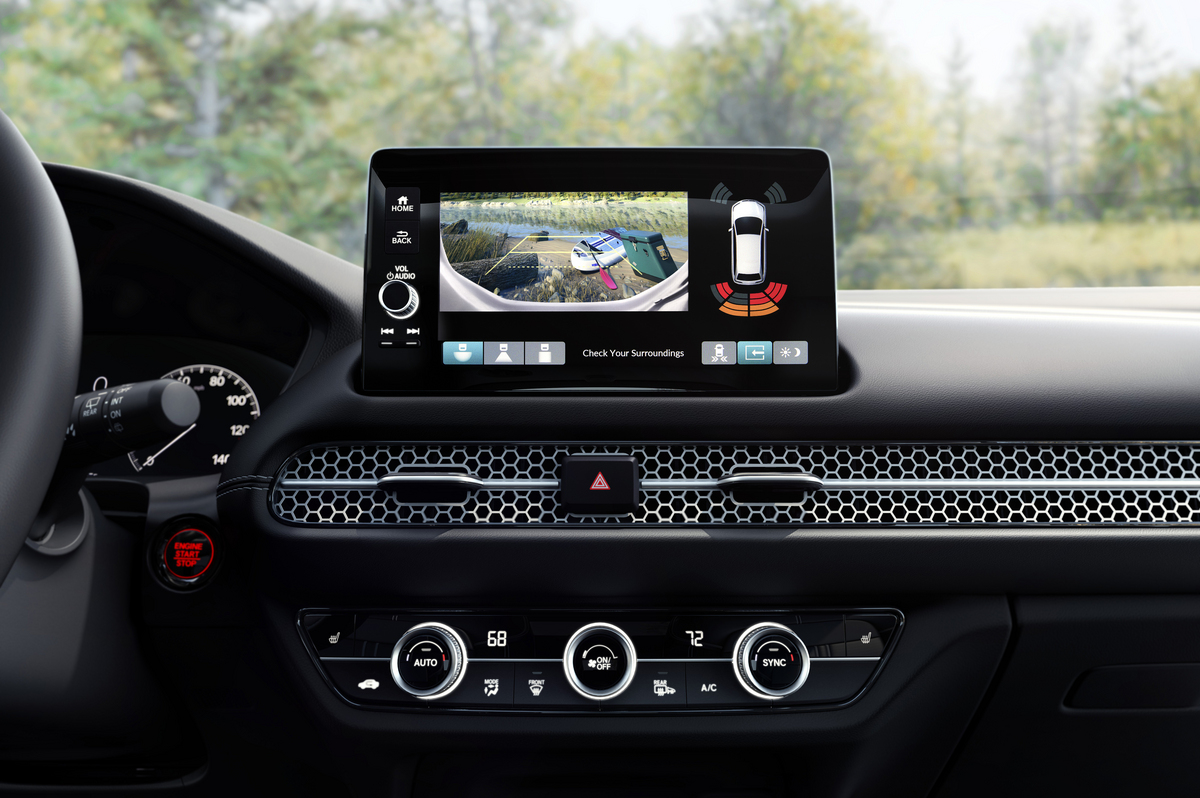
7. 360-Degree Camera Systems
These provide a bird’s-eye view of the vehicle, making parking and maneuvering much safer.
Benefits include:
- Eliminating blind spots
- Easier parking
- Better awareness in tight spaces
How These Features Work Together
Individually, these systems are powerful—but together, they create a comprehensive safety network.
For example:
- A driver drifting lanes may trigger Lane Keeping Assist
- If traffic suddenly stops, Automatic Emergency Braking activates
- Meanwhile, Adaptive Cruise Control maintains safe distance
This layered approach significantly reduces the likelihood of accidents.
The Role of AI and Sensors
Modern safety systems rely heavily on:
- Radar sensors for distance detection
- Cameras for visual recognition
- Ultrasonic sensors for close-range detection
- Artificial intelligence for decision-making
These technologies process data in milliseconds, enabling real-time responses that can save lives.
Challenges and Limitations
While smart safety features are highly effective, they are not perfect.
- Over-reliance may reduce driver attentiveness
- Performance can be affected by weather conditions
- Higher cost in budget vehicles
- Requires regular calibration and maintenance
Drivers should always remain alert and treat these systems as assistance—not replacements.
The Future of Automotive Safety
The future points toward fully autonomous driving, where human intervention may no longer be necessary. Upcoming advancements include:
- Vehicle-to-vehicle (V2V) communication
- Predictive accident avoidance systems
- Enhanced AI decision-making
- Integration with smart city infrastructure
These innovations aim to create a world with zero road fatalities.
Conclusion
Smart car safety features are transforming road safety in profound ways. By combining technology, intelligence, and automation, modern vehicles are becoming safer than ever before.
As these systems continue to evolve, they will not only assist drivers but actively protect them—making every journey more secure.
FAQs
1. Are smart safety features available in all cars?
No, they are more common in mid-range and premium vehicles, but many are gradually becoming standard in budget models.
2. Do these systems completely prevent accidents?
They significantly reduce risks but cannot eliminate accidents entirely. Driver attention is still essential.
3. Can safety features work in bad weather?
Performance may be reduced in heavy rain, fog, or snow due to limited sensor visibility.
4. Are these features expensive to maintain?
Some systems may require calibration or repair, which can be costly depending on the technology.
5. What is the difference between ADAS and autonomous driving?
ADAS assists drivers, while autonomous driving aims to eliminate the need for human control.
6. Do smart safety features reduce insurance costs?
In many cases, yes. Insurance providers may offer discounts for vehicles equipped with advanced safety systems.
7. Is it safe to rely fully on these systems?
No, drivers should always remain attentive and ready to take control at any time.
Comments are closed.